Onondaga County Democratic Board of Elections Commissioner Dustin Czarny said many of the county’s regular election inspectors have decided not to work this year. He said even more people are needed this year to help ensure proper sanitation at polling places.
My testimony in front of the NYS Legislature Joint Elections Committee on the June 2020 Primary
Below is my submitted written Testimony for the joint NYS Senate & Assembly Standing Elections Committee Public Hearing for Elections in a Pandemic: A review of the 2020 Primaries. Above is my appearance before the committee which mainly answers questions for the NYS Senators and Assemblypersons in attendance over Zoom.
Testimony before the Joint Senate and Assembly Public Hearing
Senate Standing Committee on Elections
Senate Standing Committee on Local Government
Assembly Standing Committee on Election Law
Assembly Standing Committee on Local government
Hearing for Elections in a Pandemic: A review of the 2020 Primaries
Tuesday August 11, 2020 10am
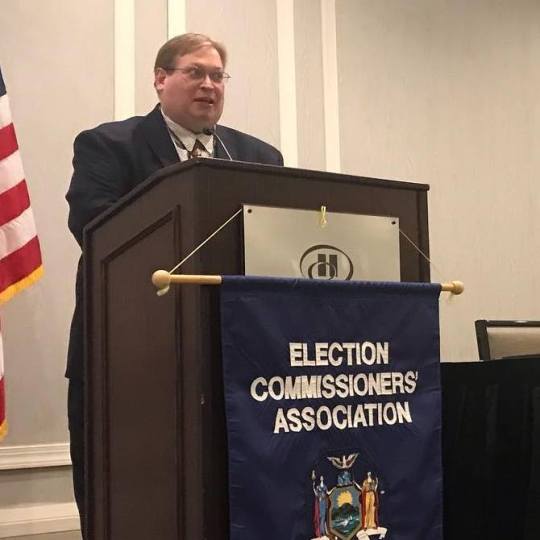
Dustin M. Czarny, NYSECA Democratic Caucus Chair
I would like to thank the NYS Assembly and Senate for holding this important hearing today and I would also like to thank Chairmen Assemblyman Charles Lavine and Senator Zellnor Myrie for the opportunity to testify. My name is Dustin M. Czarny, Democratic Caucus Chair of the New York State Elections Commissioner Association. I am also the Democratic Elections Commissioner for Onondaga County and have served in that role since 2013. This hearing reviewing our performance during the 2020 June primary is vital for understanding what went well, what went wrong, and what can be improved leading into one of the more important elections in a generation. The 2020 Presidential Election was bound to be a difficult election with highly contentious Presidential and congressional elections; however the COVID pandemic has complicated this crisis greatly.
During the spring, at the height of the pandemic, Boards of Elections had to deal with near daily changes in our election procedures. In the span of 4 months we moved a Presidential Election from April to June, mailed out applications for absentees to nearly 5 million eligible voters, redesigned absentee envelopes and ballots to allow for postage paid returns, created phone, email, and portal application systems for absentees, cancelled most special elections, cancelled and then restarted a presidential primary, mailed and received nearly ten times the amount of absentee ballots, merged elections in voting systems not designed to run separate elections at the same time, and dealt with a mostly mail in election for the first time in New York State history.
All of these challenges were done while Boards of Elections were dealing with the health crisis among their own employee’s as well civil unrest and heightened concerns for safety. The petri dish of trouble certainly created obstacles that tested the resolve of not only the Boards of Elections but United States Postal Service and local county governments.
As we look forward to the General Election there are many lessons from the primary that can help us deal with the oncoming avalanche of absentee ballots. The legislature has already done some heavy lifting that will help resolve many of the problems with this primary. They are:
· S.8370B/A10830: will give voters notice of any deficiencies in their absentee ballot envelopes and an opportunity to fix them to ensure their votes can be counted.
· S.8783A/A10807: temporarily allows the processing of absentee ballot applications prior to 30 days before the election.
· S.8799A/A10808: temporarily provides that any absentee ballot shall be presumed to be timely even if it does not bear a dated postmark if such ballot was received and timestamped by the day after Election Day.
· S.8015D/A10833: will define the term “illness” for the purposes of absentee voting to include instances where a voter is unable to appear personally at a polling place because there is a risk of contracting or spreading a disease-causing illness to the voter or to other members of the public.
It must be noted as of yesterday these bills have not yet been delivered to the Governor’s desk for signing. While it is assumed he will sign these pieces of legislation, The State Board of Elections and local boards have been frozen awaiting that signature. I bring this up not to chastise however to stress that we are 83 days away from the election, 73 days from Early Voting. If changes are to be made Boards of Elections need time to implement them. Still undetermined is whether we will be mailing applications to every voter and paying for postage on absentee ballots. Every day that goes by it becomes harder for Boards of Elections to prepare vendors and staff as well as adjust budgets.
The delivery of ballots by the United States Post Office is major cause for concern. The recent actions by the Trump Administration to make changes in delivery and the rhetoric from Washington is causing concern among the voters we are trying to protect by expanding absentee voting. The lack of postmark is not a new problem. NYSECA identified this problem several years ago and since 2016 we have been recommending the changes made last week to the receipt of absentee ballots due to the increasing lack of postmark. These hyper technical recommendations can be overlooked by the legislature but we need added emphasis on them. If this recommendation was made into law when proposed by NYSECA many of the issues and the federal lawsuit re-opening certification would not have been necessary. While I understand the thoughts behind legislation to install ballot drop boxes, this may not be an option we can fully implement in 2020. Instead I would ask New York to emphasize that ballot collection can happen at Early Voting and Election Day polling sites as well as Board of Election Offices. In some communities we may want to authorize Town and City Hall offices to collect these ballots so they are deemed timely delivered as well. It may be easier to adapt to already existing government services then design, implement, and buy secure drop boxes in the 83 days we have left.
After the Election we need a comprehensive look at the absentee ballot system. As New York looks to implement No Excuse absentees by constitutional amendment in 2021 we should start the work on enabling legislation with thoughts towards what a primarily mail in system will look like in New York. Allowing voters to supplant the absentee with an Early or Election Day vote is the primary reason results will be delayed in this year’s General Election. With Electronic Poll Books we can devise a system where the first ballot delivered to the Board of Elections, whether by mail or in person, is the ballot that is counted and subsequent ballots set aside. This will allow real time processing and canvassing of absentees to be included in Election Night results and eliminate challenges to ballots. We should also look at the delivery and application process themselves and make decisions on whether to just adopt no-excuse application process or mailing ballots to all registered voters.
Boards of Elections as well as local governments are facing draconian cuts due to the inaction of our federal government to provide direct aid to governments decimated by the COVID crisis. While Boards of Elections have some autonomy over their spending host counties will have tremendous pressure to make cuts across the all of their agencies. The independence of our Boards of Elections is vital to maintaining a standard of access for voters across New York State. I urge the New York Legislature to come up with legislatively backed minimum staffing requirements based on population for Boards of Elections. Without proper staffing all functions of New York Elections will suffer. The new political Calendar as well as Early Voting and expanded absentees require more work than ever for Boards of Elections. They must have minimal protection to ensure proper functioning through the coming financial crisis.
Finally New York must provide adequate funding for the State Board of Elections who will implement many of the regulations and changes the legislature has passed over the last two sessions and in years to come. Their work is vital to supporting local boards and a strong adequately funded State Board of Elections is necessary for herding our 62 county boards and supporting all voters of New York State.
Election officials call for more funds, resources ahead of general election – The Telegraph
Dustin Czarny, Democratic caucus chair of the New York State Elections Commissioners Association and an elections commissioner in Onondaga County, urged Cuomo to sign the measures.“ I believe that is something that is appropriate and should be done so voters can make that choice to stay safe and stay home and vote by mail,” he said.
State elections leaders plead for state help with the November election – WHEC
“I need time. That’s the thing I need the most right now. I need to know that my engagement is, what I can do on the ground so I can educate the voters in my county,” Dustin Czarny of the New York State Election Commissioners Association said. “And every day that goes by and voters ask, ‘What can I do?’ And I say, ‘I don’t know. This bill has been passed but hasn’t been signed.’ It hurts us.”
Commissioner in a Car: The primary that just won’t end edition.
Go to onvote.net to become a poll inspector, register to vote, or apply for absentee ballot.
https://www.facebook.com/dustinmczarny/videos/399209471057486
Mail-in voting: Are election officials ready for November? – CNYCentral.com
Dustin Czarny, a democratic commissioner, said they desperately need federal funds to pay for the mail-in method. “We’re talking about 26,000 absentees in the primary, and about 150,000 absentees for the general election,” said Czarny. “This is a cost-factor local counties can’t absorb on their own.”
https://cnycentral.com/news/local/mail-in-voting-are-election-officials-ready-for-november
Zoom with Czarny: Virtual Town Hall with NYS Senator Rachel May
In today’s Episode of Zoom with Czarny we continue our town hall series with NYS Senator for the 53rd district Rachel May. Senator May talks about her legislative accomplishment including the anti-fracking bills, Steam School support, And boozy Ice cream.
https://www.facebook.com/dustinmczarny/videos/1595795607251459
Wonky Wednesday: #NY24 Congressional District

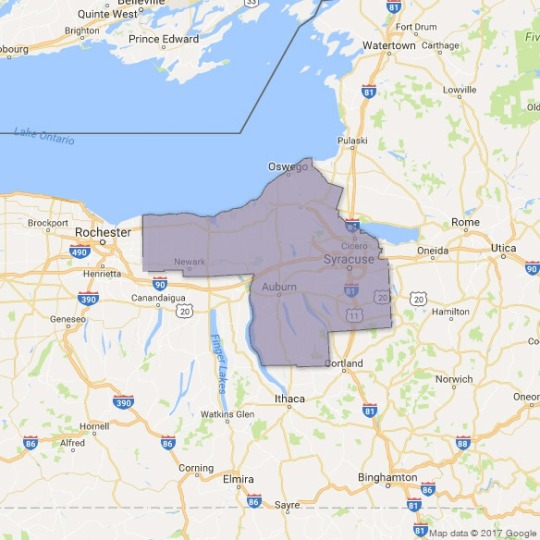
Welcome to a new feature of my voter education series Wonky Wednesday. Each Wednesday I am going to do a post on my Tumble blog focusing on registration data in Onondaga County. The last 4 years have proven to reshape Onondaga County and New York State. These changes have made Democrats more competitive in traditionally Republican areas. This series is meant to show how these demographics will shape the upcoming November election.
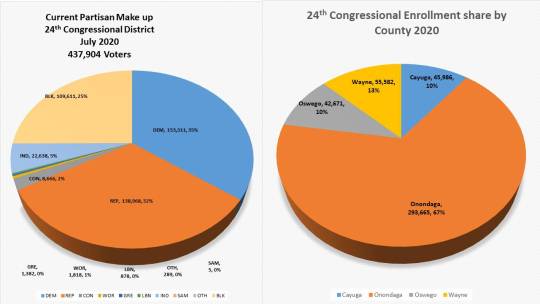
First up in this series is the #NY 24 race for United States Congress. The congressional district for Onondaga County has been relatively the same for decades. Onondaga County has always dominated the district that sits in it. Wayne County to the west has been paired with us for the last two redistricting cycles. In 2012 the portion of the district that stretched west to Monroe County was cut out of the district and Cayuga County was added along with the parts of Oswego County containing the cities of Fulton and Oswego. Onondaga County continues to dominate this district in terms of total population. The district now has a distinctive 3% point lead for Democrats, and growing.
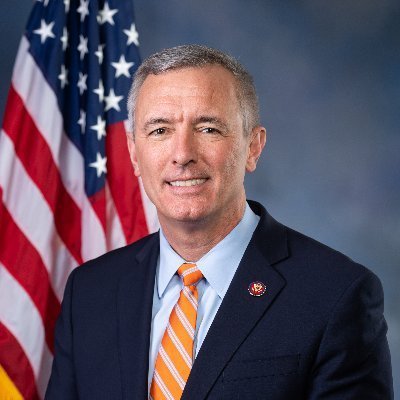
The incumbent is John Katko (R) of Camillus. Mr. Katko, a former federal prosecutor defeated incumbent Dan Maffei in the republican wave election of 2014. Katko ran up wins in every part of the district and came away with an 18.7 point victory. In 2016 Katko followed up that win by beating Colleen Deacon by a margin of 20.2% in 2016 despite Hillary Clinton winning the district in the same election. Katko has framed himself as a moderate and pointed to his involvement in bipartisan groups like the problem solvers caucus as a reason he has been able to overcome Democratic advantage in the district.
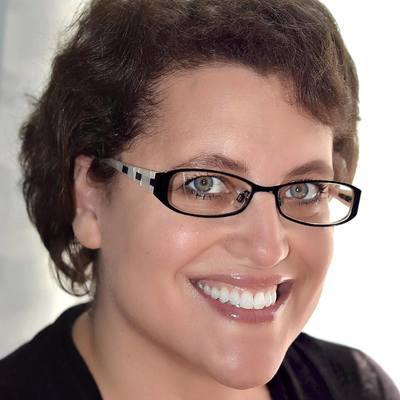
In 2018 Dana Balter gave Katko his most pressing challenge. After winning a contentious Democratic primary by a surprising 24.8 points over DCCC backed candidate Juanita Williams, Balter was able to break all fundraising records and unite most of the Democratic Party. She mounted a formidable election campaign but lost to Katko by 5.2%. Dana Balter once again faced a primary in 2020 to become the Democratic Nominee and defeated Onondaga County Democratic Committee backed candidate Francis Conole by a similar margin as her primary in 2018 (official certification has not yet been posted by State Board of Elections but unofficial counts have it as a 25.6% margin).
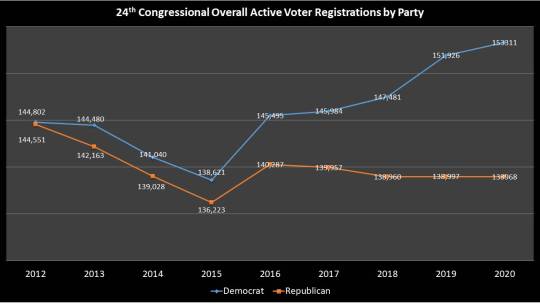
The #NY24 district was drawn to be a very competitive district. In fact at its creation it was nearly even in partisan enrollment. Democrats have grown their advantage in this district dramatically, going from an advantage of just 251 voters to currently an advantage of 14,343 as of July 2020. While the increase was starting before 2016, it has accelerated since then. That increase seems to be rowing with dramatic increases in Democratic registrations while GOP has flat lined since 2016. These changes seem to be driven by the changing nature of Onondaga County.

#NY 24 is a tale of Onondaga County vs the rest. Democrats have a growing advantage in Onondaga County that has started to produce results in local races. In fact Dan Maffei’s win in 2012 relied on running up the advantage in Onondaga County. John Katko’s wins in 2014 and 2016 erased that margin and increased the GOP margins in the outer counties as well. Dan Maffei’s loss in 2010 mirrored Dana Balter’s loss in 2018 as a narrow win in Onondaga County could not overcome deficits outside of it. The key for Balter’s chances for victory in 2020 relies on not only on increasing her advantage in Onondaga County, but reduce the deficits outside of it.
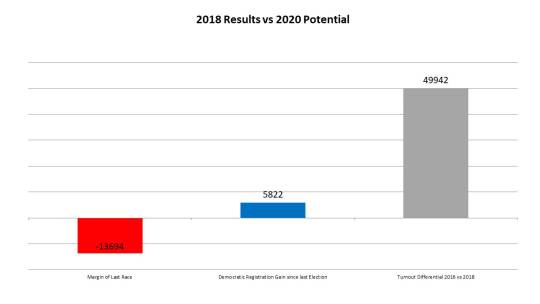
The registration gain in #NY24 on its face is not enough to overcome the 2018 deficit for Balter. In 2018 Balter lost by 13,694 votes. Since then Democrats have increased their partisan advantage of 5,822. This is good news and a decent gain despite the registration woes of the pandemic itself. That gain should continue into Election Day and could close the gap further. Where Balter’s best hopes rely is the increased turnout expected for 2020. In 2016 during a presidential year there were nearly 315k voters as opposed to 265k voters in 2018. Though 2018 was record turnout for a mid-term year, 2020 is expected to break all records. We saw that in the 2018 primary vs the 2020 primary as well. 2018 primary broke all records on turnout (25k voters) and then was shattered by 2020 (47k voters). 50 to 75k more voters could cast their vote in 2020 that stayed home in 2018. Further helping Balter is Katko’s veneer of bipartisanship is taking a hit with his endorsement of Donald Trump (he stayed neutral in 2016) and Trumps falling popularity in New York.
This is expected to be a very competitive race. National rankings have it as one of the most competitive seats in the country and polls have shown Dana Balter leading but with a small within the margin split. You can learn more about her with my Virtual town Hall with Dana Balter here or by going to her website electdanabalter.com
Commissioner in a Car: The difference between mail in voting and absentee voting and why the critics are completely wrong.
Go to onvote.net to apply for an absentee today.
https://www.facebook.com/dustinmczarny/videos/924789754668224
The Federal Government needs to fund Elections to protect voters this fall.
The Covid-19 crisis has had a detrimental effect on just about every aspect of our society. Its insidious and prevalent nature has changed how we interact with each other in every facet of life. This is especially true in our most basic tenant of our Democracy, the right to vote. Election Boards, inspectors, campaigns, are trying to ensure we can still exercise the franchise while providing a safe environment for voters and poll workers. The voice from Boards of Elections throughout New York State and the country is clear, we need help and financial support.
The current crisis has had unique and unforeseen costs to our current operations. The public’s rightful demand for safe and accessible absentee voting does not come without a cost. Participation in absentee voting has increased dramatically for the June primary. Typically Onondaga County could expect an average of 3 -5k absentee ballots and for the June primary we received over 24k absentee ballots. There is no reason to believe the fall general election won’t see a similar increase demand, however instead of 26k absentees we could see well over 100k absentees.
This comes with an increase costs for the boards. Increases in printing, postage, are a given, however, providing funds to allow for voters to participate in this process with prepaid postage for ballots and even applications for absentees will drive up the cost further. In addition, the purchase of PPE equipment and need for extra personnel to sanitize polling places and monitoring social distancing has also strained our budgets. Finally there needs to be a robust voter outreach effort to educate the public who may be voting by absentee for the first time and risk disenfranchisement if not ballots are not properly returned.
The $400 million Congress passed in the CARES Act was barely adequate to cover increased costs during our recent primaries and in many areas of the country fell well short. As we face a Presidential election that is predicted to break all turnout records in November, we need immediate and robust funding to serve voters while keeping them safe. The $3.6 billion in election spending in the HEROES Act would go a long way to helping local boards meet this challenging moment. Congress, and specifically the United States Senate, must meet this moment by providing the resources we need to serve the citizens of our great nation. Failing to do so is putting the unique experiment of our American Democracy at risk not just now, but perhaps permanently.
Finally, elections do not operate in a vacuum. Most Election Boards are hosted and funded by county and city governments. COVID-19 has had a disastrous effect on their budgets as falling sales tax revenue, as well large amounts of unemployment, have emptied their coffers. Funding for state and local governments is just as large of a priority. Election Boards cannot operate effectively if the government structure around them is in constant turmoil. Only the Federal government has the resources and legal authorities to be able to provide this vital assistance. It should be done as soon as possible, and be as generous as possible, to allow our country the resources needed to live with and eventually defeat this epidemic.
Dustin Czarny
NYSECA Democratic Caucus Chair
Commissioner, Onondaga County Board of Elections (D)
 Dustin M. Czarny