“With having a caucus…you have a party running an operation as opposed to a state government or county government running it with election officials,” he says.
Even if there were a better developed app, Czarny says New York State’s current methods of handling elections are efficient enough as they are.
“Our reporting system is better than most…around the states,” he says. “We have dedicated employees that are trained and ready to report these results.”
“This is not a situation of somebody trying to steal something,” Czarny said. “There are paper backups in Iowa, there are paper backups in New York. It’s an issue of technology glitch that has delayed results. But just because results are delayed does not mean they are being tampered with.”
“The quicker somebody can check-in, get their ballot, and vote, and leave, the more likely they’re going to repeat that experience,” said Czarny. Happy to continue to improve this with KNOW.ink this year.
In Onondaga County, Democratic Board of Elections Commissioner Dustin Czarny said their biggest vulnerability is with outside vendors they use. On election night last year, a technical glitch from a vendor delayed election results.” It was a 45-minute delay that felt like 45 years,” Czarny said. “We learned how not to have that problem in the future and how to test for it as well.”
“Those tabletop exercises will allow commissioners to think off their feet and be able to resolve problems as they come up because we don’t know what the problems are going to be,” said Dustin Czarny, the Democratic Elections Commissioner for Onondaga County.
“We’re concerned too but we’re taking steps to make sure that everything is going to work in a way that the votes are counted, counted accurately, and the results are able to be posted in a timely way,” said Onondaga County Democratic Board of Elections Commissioner Dustin Czarny.
Elections commissioners from Onondaga County and Oswego County both attended the briefing. They said they need more IT help to deal with the amount of technology that’s now required for elections.
“This is our new normal,” said Onondaga County Elections Commissioner Dustin Czarny.
This past November the citizens of New York turned out in record numbers to reform and reshape New York state government. Driving many to the polls was an effort to change our antiquated election system in New York state. Often these reforms were blocked by the GOP leadership in the state Senate. The voters rebelled against this and voted to unify NYS government with a mandate to reform our electoral process. The state Legislature and governor are promising to heed this call. We support this decision and urge them to act early in the next session to provide the reform voters want.
The Democratic elections commissioners of New York state are eager to enact these reforms. Last March our caucus embraced many of the reforms that are being discussed today. We once again affirm our commitment to working with lawmakers on all sides to help shape reasonable and responsible legislation to modernize our electoral system. Among the many reforms needed we support the following:
A unified primary in June: New York state is the only state in the nation that has two primaries for determining general election candidates. Our September primary is in violation of the federal MOVE act and for the last six years this has resulted in two primaries in federal years, a federal primary in June and a local primary in September. It is estimated that this has cost New York state taxpayers $50 million dollars each federal year and causes voter fatigue and confusion. A move to a June primary will not only save precious taxpayer dollars but alleviate calendar issues that prevent other reforms. We urge an immediate adoption of a unified primary in June.
Early voting and no-fault absentee: 37 other states enjoy the convenience and benefit of early voting. This vital electoral tool for is long overdue in New York state. We urge the adoption of early voting with at least two full weekends for New York voters. We also urge a permanent funding source be provided from the state so the added cost is not a burden to county governments. A move to electronic poll books will also ensure the success of early voting and modernize the Election Day experience for voters. In addition we urge the Legislature to start the process of a constitutional amendment to move to a no-fault absentee voting system.
Modernize our registration system: New York state’s antiquated registration can stand to benefit from proven reforms we see happening in other states. First among these reforms is automatic voter registration. A switch to an opt-out instead of an opt-in system will remove one of the biggest barriers to participation, registration. An online voter registration system managed by New York State Board of Elections will provide oversight to DMV and help other agencies comply within guidelines to ensure accurate and timely registration. We also urge the Legislature to remove the restriction on polling places for affidavit ballots and start the constitutional process for same day registration for all voters who may fall through the gaps of an AVR system.
End fusion voting: Many of the frustrations of our voting system stems from the root of fusion voting. The fusion voting system encourages minor parties that are parties in name only and act as cross-endorsement agents of major parties. Competition over minor party lines lead to ballot delays and voter confusion. We urge the Legislature to take a serious look in to ending fusion voting and providing clarity to voters.
Make general Election Day a state holiday: We applaud the governor’s call for a state holiday for general Election Day. Not only will this properly emphasize the importance of Election Day, it will free up potential polling places in schools and much needed inspectors from the ranks of municipal and state employees.
New York state voters have awaited reforms for a very long time. The legislature should move quickly to pass legislation to start the process of reform over the next year. By the time New York state participates in our presidential year of 2020 we should be well on the way of reforming our voting process. Voters of New York deserve swift answers to their calls for reform. It is our hope with a unified New York state government, the obstacles of the past are removed and we can look forward to a bright future for our electoral system.
My testimony before the NY State Senate and Assembly joint Elections Committee hearing on Early Voting. I gave testimony about continuing NYS funding and ways to remove impediments to expanding Early Voting sites.
You can see the full testimony of all witnesses here:
In 2019 New York became the thirty ninth state to implement Early Voting. This long awaited much needed reform was popular among voters and advocates for years. The Democratic Elections Commissioners of New York State also shared in this anticipation. We heard the complaints from voters who were confused in 2016 why other states had Early Voting programs but New York State did not. The Democratic Caucus of Election Commissioners advocated for this vital reform in hopes of having it implemented before the 2020 Presidential Primary. Unfortunately, years of partisan divide in the New York State Legislature kept that reform from happening.
That is until the 2019 Legislative session. On the first day of this past year’s session the legislature passed Early Voting into Law and the Governor quickly signed it. This ambitious legislation looked to erase years of stagnation in New York’s electoral system. Access to Electronic Poll Books and On-Demand ballot printing systems were also needed
By passing Early Voting and trying to implement it in the same year the bar was set high but the Boards of Elections throughout New York State rose to the challenge. Despite introducing new laws, new equipment, and a short period to implement the first Early Voting period in New York State history was a success. Over 250k voters chose to vote Early in New York State. Boards of Elections are still finalizing the our certification, but independent media analysis in my county showed significant amount of Early Voters did not vote in the last local election in 2017. Anecdotally turnout was up in New York State compared to the last similar election year (2015). Early Voting and the publicity around it looks to have been a factor in increasing turnout in its initial year.
It would be a mistake to only define success by voter turnout. A more accurate measure will be usage and its increase over time. The other 38 states that have implemented Early Voting have seen dramatic increases in the number of voters choosing this option. There is no reason not to believe New York will see the same increase. As voters trust the new technology and understand this option is available to them, more voters will choose the convenience of Early Voting. Turnout also can vary from year to year as we are dramatically increasing the number of voters as registration is easier than ever. When Automatic, Online, and Same Day Registration become options in New York we will increase the pool of voters and that will alter turnout statistics. We should rather look at totals than percentages to truly gauge whether these reforms are having an effect.
We should not discount the benefit of convenience alone as a measure of success of Early Voting. While every reform is aimed at increasing our turnout, convenience and ease of voting is a worthy investment in and of itself. Fiduciary concerns cannot be the only factor when making decision about the building block of our Democracy, the right to vote and choose our representatives. It is also important to remember that the period of nine days for Early Voting while an improvement over zero, is still one of the shortest Early Voting periods in the nation. A full analysis must be done including the amount of money saved in personnel hours by implementing new technology.
Electronic Poll Books were a necessity to implement Early Voting, but their use will save my individual Board of Election well over 1000 personnel hours each election in post and pre-election preparation. Voter History will be more accurate than ever and available sooner than ever. More efficient polling places will eliminate the need for inspectors in multiple ED sites. In talking with my other commissioners throughout the state who fully adopted Electronic Poll Books for Election Day as well as early voting they are seeing this savings as well.
We will also save thousands each election on printing costs. Electronic Poll Books eliminate the need for the traditional printing of poll books for Election Day. On-Demand ballot printing can eventually save printing costs and reduce the number of extra ballots printed for each election. Not to mention both will be a greener option as we all must do our part in addressing the environment.
Now that we have implemented our first Early Voting period, the legislature should look to fix the process to make it easier for Boards of Elections to service the voters and increase the convenience of our constituents. It was necessary to pass the legislation enabling Early Voting early in the session to give us as much time to prepare and implement Early Voting in a local year. However, as we prepare for the most consequential Presidential Election of our lifetime, we need to make adjustments and continue commitments so we perfect this vital reform. My caucus is yet to finalize official recommendations as we are still in the midst of certifying this past election though informal discussions have centered around four areas of concern. Those are: Continued Operational Funding, Increasing the number of Early Voting Poll Sites, Addressing youth participation by allowing Early Voting on College Campuses, and investing in technology to further advance Early Voting convenience.
The first concern for Democratic Elections Commissioners is continuing support for Early Voting operational costs. The Legislature was wise to include $10 million in operational funding to offset the cost of Early Voting with the Aid to Localities Grant in the 2019 budget. The Governor adopted the plan by the State Board of Elections. This plan encouraged an investment in Early Voting sites and offset the amount of investment host counties would have to add to already set budgets. If we want to continue to have a robust Early Voting program this funding should continue. This funding will allow voters in every county to have equal access to vital reforms. Relying on local legislators for funding on this reform could lead to inequities from county to county. In a vital 2020 Presidential year we need to make sure we cannot have a drop in levels of service. In fact we should be looking to increase our levels of service.
Many counties wisely took the state funding to expand their Early Voting sites to well above the minimum. However there was still resistance in many counties to doing just that, even denying themselves funding in order to serve their voters less. In larger counties the rule that maxed out the number of mandated sites at seven circumvented the wish of the legislature to have one site for every fifty thousand voters. Some counties did not add more beyond seven, some added only a few more but less than the one per 50k guidelines from the legislature. This limit on the mandated sites hamstrung commissioners who wanted to take advantage of funding and put sites close to voters. It should be rescinded.
In addition to rescinding the maximum mandated sites, the legislature should seriously look at reducing the number of voters per site in each county. Our vendors have informed us that other states try and have one site for every thirty thousand voters. The counties that took advantage of the state funding and went beyond the minimum required, counties such as Erie, Dutchess, Ulster and Cayuga, saw significant increases in percentage of the overall enrolled voting population. Media analysis and anecdotal data seem to suggest that proximity to a polling site is one of the biggest factors in usage by voters. Having more polling sites in a county spread out on geographic location will give more citizens opportunities to have access to this reform. The increase in sites doesn’t necessarily reflect an increase in costs as less inspectors and equipment would be needed at each site and the technology we put into the field can process more voters efficiently.
Another option the Legislature should consider is a mandate to extend this reform to college campuses. Last year the legislature wisely mandated Election Day polling sites on campuses of a certain size. We know that the age group that participates the least in our Democracy are voters age 18-25. Many times lack of transportation and access is cited a main factor in their decision not to participate. We can be creative in how to address this. We may not need a full 9 days of Early Voting at these campus sites. Many college campuses are not suitable for to serve as a full 9 day site for the community for various reasons. However the legislature could mandate three days of voting during the week while classes are in session, a time when students and faculty are on campus. The technology is easily adaptable and staffing can be flexible as well. At the very least Community Colleges made up mostly of residents within the county they serve can be a prime vehicle for addressing turnout amongst this age group. By mandating this the legislature can make sure that all counties, and all colleges, treat this population equally.
Finally, we must continue to encourage investment in technology that will make Early Voting easier and help the Boards of Elections service our voters. Improving the Electronic Poll Books and On-Demand ballot printers and encouraging their use on a county wide level is a start. Beyond that we need to improve the scanners themselves. The best practice for Early Voting is to have On Demand sites where a voter can go to an Early Voting site in a county. The boot up procedures for scanners with hundreds if not thousands of ballot styles can prove arduous and time consuming. Also the audio sessions sometimes necessitate more than one Ballot Marking Device be placed in large county on-demand sites. We should encourage our vendors to develop new technology for these demands and provide the funding stream for counties to purchase them. Affidavit Ballot printing for the On-Demand devices is lacking with some vendors and can make a daunting task for Early Voting sites.
The 2019 Early Voting period was a good start down the path of modernizing the New York State antiquated electoral system. The historic 2019 legislative session gave greater access to the voters of New York State and brought long awaited reforms to our system. I encourage the legislators to continue to be bold and pass reforms and funding that will continue our progress from worst to first. Thank you for your time and this opportunity to present this testimony.
“Onondaga County Elections Commissioner Dustin Czarny said Majok’s win is “going to be a boon for the growing refugee community here in central New York and specifically the city of Syracuse.”“They see this as a victory for them and they now have a voice on the city council that will cater to their specific needs,” said Czarny.”
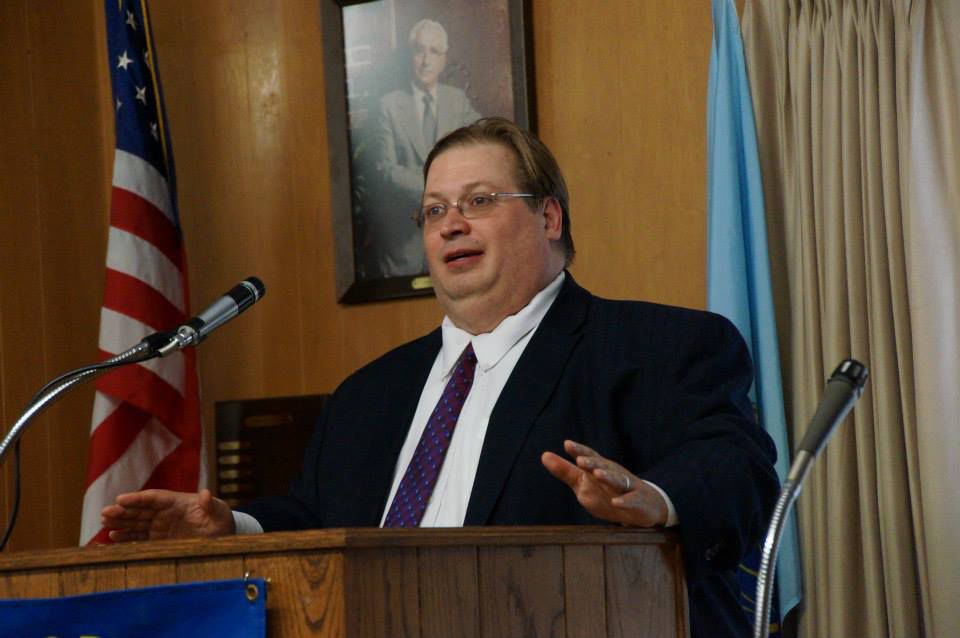
 Dustin M. Czarny