The Weekly Wonk: The Town of Onondaga 2026

Welcome back to the #weeklywonk. This is my weekly data article that I host on dustinczarny.com. Each week I dive into the electoral and registration data that affect races in Onondaga County and New York State. I am in the middle of my 6-part series looking at towns who nominate Democratic candidates by petitions starting February 24, 2026. This week is part 4 of this series looking at the Town of Onondaga. This is one of the battleground towns this year with Town Supervisor and County leg seats up in an even town.

How even is the town of Onondaga Registration? Democrats have the plurality with 5,373 voters (32%). Non-Enrolled are in second place with 5,164 (31%). The Republicans are in third place with 5,035 voters (30%). Other (716 voters, 4%) Conservatives (270, 2%, and Working Families (63, 1%) make up the rest of the 16,621 voters. Democrats only have a +2.03% borderline registration advantage which makes Onondaga one of the closest towns in our County. Despite its size it is in mostly one county legislative district, OCL 11, except for the Onondaga Nation which is in OCL 12. There are no separate villages in the town. Onondaga elects all town officials in town-wide elections. Thus, to look at the town in a regional sense I have broken it by ED into four distinct sections. The western section (4,250 voters 26%) that borders Camillus and Geddes. South Onondaga (3,675 22%) is the more agrarian portion of the town. The East portion (3,673, 22%) which is densely packed suburban style bordering the valley of Syracuse. Finally, the Nedrow section (5,023, 30% wrapping around the south valley of Syracuse including the Onondaga Nation territory). These are not perfect regional breaks but will allow us to look at this large Town in segments.

The growth of Onondaga has mirrored the growth of Onondaga as a whole. The growth of voters started in 2016 but dramatically increased in 2020 after the registration changes by the New York State Legislature took effect. The high-water mark was the 2024 election, and we are seeing the normal retreat that happens in the following months of a Presidential election. 2016 is the standard area of reference for us when it comes to growth and we can see that the Town of Onondaga grew by 1,178 voters during that time (+5.96%). This is like the growth rate in Onondaga County of +7.63% since 2016.

Looking at the heat map of the individual election districts of the Town of Onondaga, a pattern emerges. The closer the election districts that border the City of Syracuse, the more dominant Democrats are in the district. Likewise, the farther away, the more agrarian, the more dominant GOP is. The Town of Onondaga contains both highly concentrated Democratic districts and areas with a strong Republican presence. Even though this is an even town, it is a wildly diverse town in terms of partisan strength. Adding these parts all together gets a town as closely partisan as it is now.

Looking at the general regions of Onondaga, we see the same diversity of the individual election districts. There are two Democratic regions (East & Nedrow) where the non-enrolled outnumber the GOP. There are also two GOP regions (South and West) where the non-enroll outnumber the Democrats. The East dense suburban ED is the most Democratic with a +14.92% Democratic enrollment edge. Next is the Nedrow region, which has the highest number of Democrats and leans Democratic by +7.70%. The Western portion is a traditional lean GOP area with the Republicans have a +5.13% partisan advantage. The South is the most GOP dominant advantage with +9.41% but the non-enrolled are remarkably close to eclipsing both the GOP and Dem individual totals.

These two graphs show the partisan advantage since 2009. Again, the town of Onondaga is a microcosm for the how the suburbs of Onondaga County have transformed over the last 10 years. Democrats overtook the GOP in this town in 2020 and non-enrolled overtook the GOP in 2025. Democrats since 2016 have added fifty-one voters. The GOP since 2016 has lost 199 voters. The non-enrolled were again the highest gainers, adding one thousand voters since 2016. Even when you add in the working families and conservative to determine the ideological advantage the pattern is clear. In 2009 the Town of Onondaga was a solid 9.38% advantage for the GOP and now is a as close as possible with a .79% advantage for the Democrats.

This year I am looking at age to examine these political subdivisions, The Town of Onondaga is a normal town averaging 51.31 years, just slightly over the Onondaga average of 50.87 years. The largest age group is 61-70 years old, but all the age groups are close in size. When looking at the partisan breakdown of the age group the theme of a divided town of Onondaga continues. Democrats are solidly dominating the under fifty age groups. 31-40 Democrats have a +12.37%, 41-50 Democrats have a +9.63% advantage, and the youngest group Democrats only have a +6.30% because of the domination of the non-enrolled in that age group. Republicans have slight edges in the more populous older age groups. 51-60 the GOP has +5.80%, the 61-70 GOP has +6.85%, and the oldest group the GOP has a borderline advantage of 2.42%.

When we look at the comparative races, we see a Town that truly acts differently in higher turnout presidential years, mid turnout gubernatorial years, and low turnout odd years. In 2024 the Town of Onondaga showed up for Democrats in a huge way, giving a +11.39% for John Mannion for Congress and a +9.36% for Kamala Harris for President. In the Gubernatorial year we saw a split. Onondaga supported Francis Conole by 5.27% for Congress but Lee Zeldin edged out a +1.09% advantage (though under a majority). In Odd years Democrats have not fared so well. Emily Essi for county clerk won countywide by .33% but lost the Town of Onondaga by 11.07% in 2023. Likewise, Anthony Brindisi of Supreme Court won the county by 5.04% but lost the Town of Onondaga by 8.28%. In 2025 Khalid Bey improved on both of those results but still lost the Town Supervisor race by 4.34%. Again, the Town of Onondaga is close to the County of Onondaga average of the six comparative races where Democrats win the town on average by 5.58% and Onondaga County on Average by 8.73%.

That is, it is for this week’s #weeklywonk. Next week we turn our eyes to the northern suburb of Syracuse, the town of Salina. Home of the Salina sweep in 2025! We will look at why this town flipped so drastically and the implications that it will have in 2026. As always you can subscribe to dustinczarny.com and get an email notification for all content and election news updates.

Commissioner in a Car: Conventions and Designations

In this week’s episode I explain the difference between State Conventions and County Designations. The state has direct ballot access while county designees still have to get petitions. This is the first step in determining the ballot each year so I take some time to go over it. Enjoy.

RSS: https://anchor.fm/s/24e46794/podcast/rss

Subscribe to dustinczarny.com for all content and election news updates
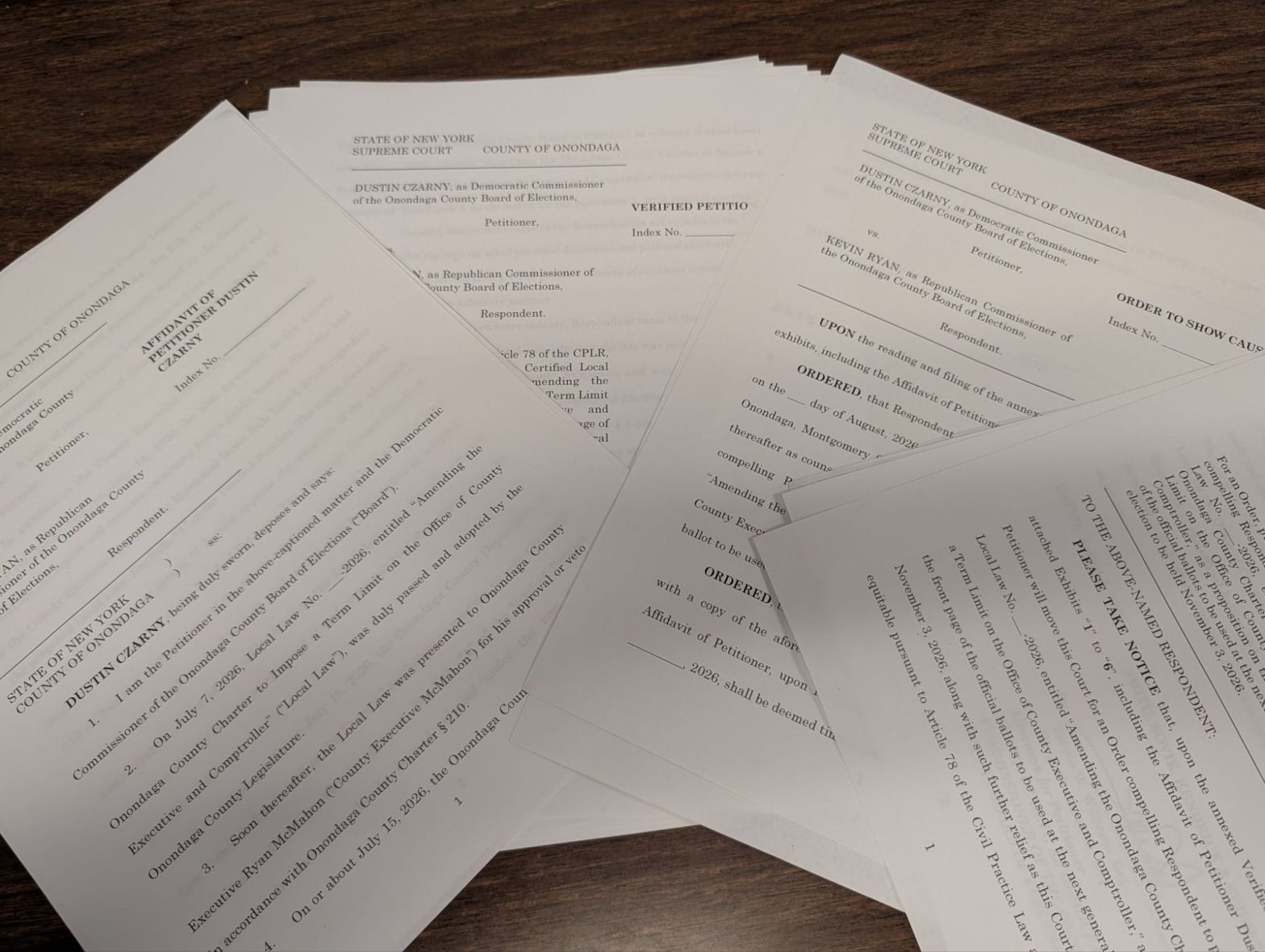
My Testimony to the NYS Legislature Local Government Budget hearing (2/11/26)

Each year as Democratic Caucus Chair I travel to Albany to give oral testimony on the Governor’s proposed executive budget. NYSECA is asking for $35 million for aid to locality funding to support county Board of Elections. Find the full 10 hour day of testimony here:

https://www.nysenate.gov/calendar/public-hearings/february-11-2026/joint-legislative-public-hearing-2026-executive-budget

My written testimony is below

Testimony before The New York State Assembly & New York State Senate Joint Legislative Budget Hearing on Local Government

Tuesday, February 11, 2026. 9:30 AM

Dustin M. Czarny, NYSECA Democratic Caucus Chair, Commissioner (D) Onondaga County

Thank you for the opportunity to testify today. My name is Dustin Czarny, and I am an Elections Commissioner in Onondaga County and the Democratic Caucus Chair of the New York State Elections Commissioner Association. NYSECA represents the diverse needs of all sixty-two counties across New York State.

I am proud of our bipartisan county Board of Elections system, which serves as a model that should be followed nationwide. Democratic and Republican commissioners work together to ensure the integrity of our election system. These built-in checks and balances help New York avoid the partisan battles unfolding in other states. Commissioners must continually find ways to put partisan ideologies aside in order to meet the needs of voters.

The year 2025 marked the end of an era for county Boards of Elections across New York State. The transformative Even Year Election Law will take effect beginning in 2026, with many local offices transitioning to federal election years. Town and county offices affected by the law will be fully seated in even-numbered years between 2026 and 2030. As these offices transition, Boards of Elections will face unique challenges. More offices and increased competition in federal years will result in longer ballots—potentially two-page ballots in some jurisdictions. The year 2026 is already shaping up to be unique. Evidence from 2025 and special elections across the country suggests that 2026 may resemble a presidential election year more than a typical midterm in terms of turnout and intensity. County budgets for 2026 are usually adopted in the final quarter of the previous year, meaning many counties may be unprepared for unanticipated costs resulting from the Even Year Election Law transition and increased election intensity.

Since 2019, New York has implemented major election reforms, including Early Voting, electronic poll books, and universal voter registration transfers. We have also developed a robust vote-by-mail system, including the addition of Early Vote by Mail. These reforms have resulted in some of the highest vote-by-mail volumes outside of the pandemic years of 2020 and 2021. Additionally, we implemented a cure process to prevent the accidental disenfranchisement of absentee voters due to technical deficiencies. While no system staffed by human workers is without flaws, our Boards of Elections have risen to the challenge and maintained a strong and reliable election system in New York.

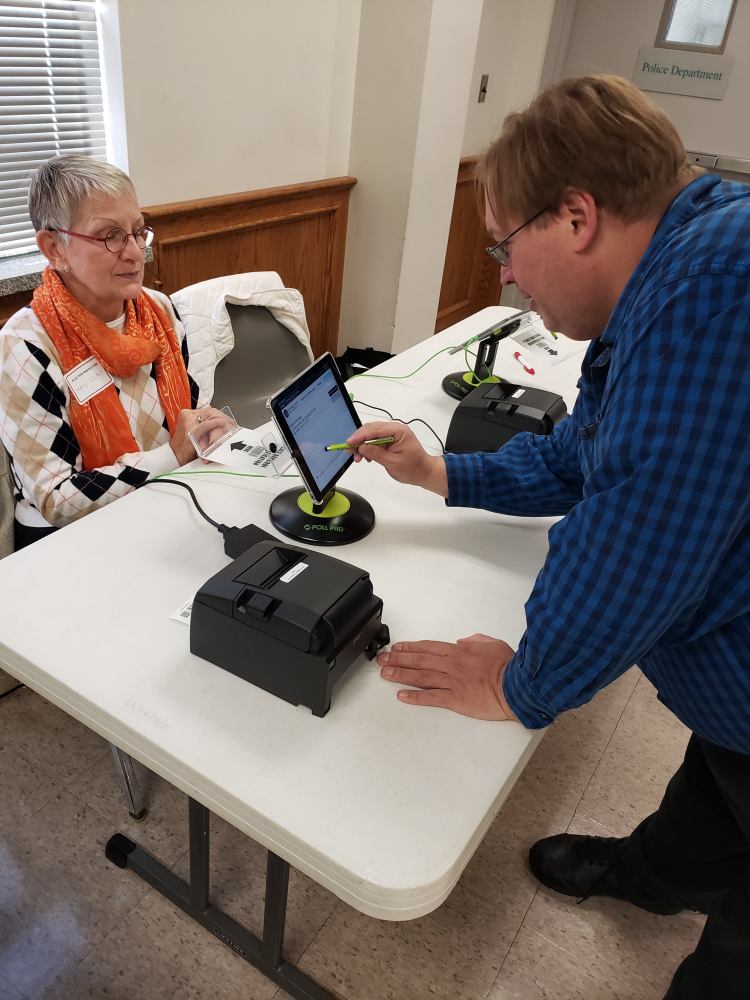
The Democratic and Republican commissioners of the New York State Elections Commissioner Association believe New York should move toward annual funding for local Boards of Elections, replacing the multiple grant sources currently in place. To that end, we are requesting $35 million in Aid to Localities funding for 2026. Greater flexibility at the county level would allow for more efficient use of funds. Some counties may need resources for vote-by-mail operations, others may require temporary staffing assistance, and still others may need equipment or supplies. We also recommend multi-year grants that do not expire at the end of each fiscal year, allowing counties to align purchasing decisions with election and procurement timelines. Many counties are also operating with aging electronic poll books that need to be replaced. The Executive Budget has addressed this issue in recent years, and I commend those efforts. Most poll books purchased in 2019 during the rollout of Early Voting were sixth-generation iPads. While these devices remain serviceable under the current version of iOS 17, counties are preparing to transition to iOS 26, which no longer supports fifth- and sixth-generation iPads. These devices will need to be replaced ahead of the June 2026 primary. We respectfully request that this grant funding be reallocated in 2026 to provide Boards of Elections with the necessary time and flexibility to complete this transition.

Annual state funding support is more important than ever. The future of federal election funding is uncertain, and New York is among the few states that does not provide annual funding streams for local Boards of Elections. Establishing such funding would eliminate the need for recurring annual requests, enable long-term planning, and ensure parity of service for voters across the state, regardless of where they live.

By establishing annual funding, New York can ensure that every county has the resources necessary to protect the right to vote. In addition to existing reforms, the state should provide clearer guidelines for minimum service levels at county Boards of Elections. This includes establishing staffing minimums tied to voter registration levels and mandating full-time commissioners, as modern political calendars require year-round engagement and oversight. These standards can be established and monitored by the State Board of Elections, preserving the independence of local Boards while ensuring counties and the state provide the resources necessary to fulfill our mission.

Thank you again for the opportunity to testify today. I hope we can count on the Legislature’s continued support in defending our democracy here in New York.

Dustin M. Czarny

Commissioner (D), Onondaga County

Democratic Caucus Chair, NYS Elections Commissioner Association.

Subscribe to dustinczarny.com for all content and election news updates
The Weekly Wonk: The Town of Marcellus

Welcome back to the #weeklywonk. This is my weekly statistical based column I host on my website, dustinczarny.com. Each week I examine an aspect of either Onondaga County or New York state. I focus on electoral or registration data to give a glimpse behind the forces that drive politics and elections. This week I am continuing my 6-part series on the towns that nominate Democratic candidates by petitions starting February 24th. In part 3 I focus on the Town of Marcellus, a normally GOP town that took a dramatic blue swing in 2025.

As of February 8, 2026, the Town of Marcellus has 4,837 registered voters. Republicans have the plurality with 1.685 voters (35%). Non-Enrolled comes in second with 1,455 voters (30%). Democrats come in third with just 1,328 voters (28%). The Town of Marcellus is small enough to fit inside one whole Legislative district so we will look at each of 6 Election Districts that make up the town. Marcellus village lies within the town, comprising election districts three and four, and covers approximately 27% of the town’s total area. The remaining four election districts are situated in rural areas, where voter registration is similar across each district.

The Town of Marcellus has grown significantly since data was readily available in 20029. During this year’s # weekly, I am focusing on 2016 as a point of comparison. The town of Marcellus grew by 272 voters since November 2016. That represents a growth of just 5.96%. The bulk of that growth does come after the voter registration changes in 2019.

From this map we see the extreme diversity of the town of Marcellus. ED 3 and 4 serve as the representatives for the Village of Marcellus. They are the only two eds with Democrats in the plurality. ED 3 is a lean Democratic district in the +5-10% range. Ed 4 is borderline Democratic (+0-5% DEM). ED 6 just outside village and a little more suburban is borderline GOP (+0-5% GOP). ED 1 in the northwest corner is slight GOP (+5-10% GOP). ED 5 in the northeast is a strong GOP lean (+11-15% GOP). ED 6, the large southern rural ed is overwhelming GOP (>+20% GOP).

Here we investigate the six election districts in more detail. ED 3 represents the most Democratic lean with a +8.39% ranking and we even see the non-enrolled slightly outnumbering the GOP. The Borderline Democratic ED 4 is a rare ed where the Dems barely outpoll the GOP but the non-enrolled outpolls both. We see that in the borderline GOP ED 6 as well with the GOP barely beating the DEM and the non-enrolled beating them both. The Lean GOP ED 1 has your standard GOP plurality with Democrat 2nd and non-enrolled third. Buth of the other GOP of ED 2 & 5 show the GOP well ahead of the Democrat and the non-enrolled in second place.

These two charts show the Partisan trends of the enrolled voters over time. We once again focus on the common comparison point of 2016. Since then, the GOP has been stagnant, adding just twenty-six voters. The Democrats in the meantime have added 175 voters. The non-enrolled though as is often the case is the largest growth at +203 voters. When we look at the ideological lean from 2009 in the bottom graph, we see that there is a strong steady move to the middle. This graph shows the dominance of the GOP and conservative party shrinking from a 16.22% difference over the Democratic and WFP parties to just 9.08%. this with the growth of the non-enrolled Is why Marcellus is shedding its Gop dominance to become a swing town.

In 2026 I am rolling out an analysis for age of the average voter/ Marcellus, like most towns have an older average voter. The average Marcellus voter is 52.910 years, significantly higher than Onondaga County average of 50.87 years. The 71+ age group makes up the largest proportion, accounting for 22% of the total. When we look at the age group’s partisan leans, we see that the GOP leads in five of the six age groups with Democrats only outnumbering GOP in the 31-40 group. However, we also see the non-enrolled beating both parties with the two groups under forty and beating the Democrats in the two groups 41-60. The GOP tends to dominate the over fifty range while just barely are ahead in the under fifty range.

When we look at the Comparison races, we see that despite the GOP numerical advantages, Marcellus Democrats have had their share of success in this town. In Presidential years Democrats can expect about a 5%-point victory with John Mannion (+6.06%)), Kamala Harris (+4.47%) both winning the town in 2024. In Gubernatorial years, the GOP tended to have the edge with Brandon Williams (0.25%) barely winning the congressional race and Lee Zeldin (+5.27%) winning the Governor race in this town. In local years Democrats tend to not do as well with the GOP Lisa Dell winning the County Clerk race by +14.4% and Daniel Fogel winning her 2021 Supreme Court race in Marcellus by last year by 7.98%. However, in 2025 the Democrat Jane Carmody won the Marcellus Supervisor race by 2.65%. This continued the shift towards Democrats we saw in 2024. On average in the comparison race Marcellus has a +2.91% GOP lean when compared to +8.73% Democrat in Onondaga County as a whole.

That is, it is for this week’s edition of the #weeklywonk. Next week I continue my 6-part series of investigating the towns that Democrats designate candidates via petition. Part 4, the Town of Onondaga, will look at this exceptionally large town that is becoming a true swing town and on the verge of local success. As always you can subscribe to dustincarny.com to get an email notification of all content and election news updates. Enjoy.

Commissioner in a Car: Fall in Love with Your Party Day.

On this week’s episode I talk about the February 14th party change deadline in New York. it falls on Valentine’s Day every year and that is why I call it “Fall in Love with Your Party Day”, I dive into why this 4.5 month sequester is actually much better than the past and what it means for petitions and primaries.

RSS Feed: https://anchor.fm/s/24e46794/podcast/rss

Subscribe to dustinczarny.com for all content and election news updates

Clay’s supervisor race: Two town councilors will vie for open seat in county’s largest town – Syracuse.com

Dustin Czarny, Onondaga County Democratic Committee elections commissioner, said the votes show a shift in the town.

“This is a big race. There is a large amount of attention on Clay with Micron coming,” Czarny said.

https://www.syracuse.com/politics/cny/2026/02/clays-supervisor-race-two-town-councilors-will-vie-for-open-seat-in-countys-largest-town.html

Subscribe to dustinczarny.com for all content and election news updates
The Weekly Wonk: The Town of Manlius 2026

Welcome back to the #weeklywonk. This is my weekly article I publish on dustinczarny.com. In this series we follow the electoral and registration data that make up Onondaga County and New York State. I am in the middle of a 6-part series on Towns in Onondaga County that nominate Democratic candidates by designating petitions, starting in late February. Part 2 ins this week and I am investigating the Town of Manlius. This eastern town is one of the most important towns for Democratic lawmakers in the county, seen as a lynchpin for Democrats running for public office both counties wide and regionally.

On February 1, 2026, The Town of Manlius had 25,614 voters, the third largest town in Onondaga County. We can see right from the start why Manlius has its reputation as an anchor town for Democratic candidates. Democrats have a strong plurality with 9,135 voters (35=6%). The non-enrolled is second with 8,014 voters (31%). The GOP comes in third in this town with 7,044 voters (27%). 958 Voters in other parties (4%, 402 Conservatives (2%), and 61 Working Families (<1%). The 8.16% Democratic advantage is near to the Onondaga County average of +10.03%) The Town of Manlius is so large It has a whole county legislature district inside of it (OCL 10 21,219 voters 83%). OCL 12 is in the southwestern area of Manlius, including the village. This area comprises 4,395 voters, accounting for 12% of the total.

The Town of Manlius is the poster child for the transformation that Onondaga County has undergone since 2016 that I have been chronicling this year in my #weeklywonk columns. This includes the growth of active registered voters. In November of 2016 Manlius had 23,567 registered voters. On February 1, 2026, it had 25,614 voters. That is a growth of 2,047 voters since 2016. The growth of 8.69% is near what we saw in Onondaga County during that time (14.18%). The registration advances over the last few years are keeping more people registered and making it easier to register to vote and that is also contributing to the growth.

Looking at the heat map of individual Eds we really see why Manlius has become so blue. Only four eds (ED 1,9,10, 15) have slight GOP leans (+5-9% GOP). They are in the Northeast corner of the Town and represent the more rural parts of the Town. ED 32 has a borderline GOP lean (+0-4% GOP). The rest of the Eds have a statistical advantage for Democrats. ED 2, 19, 24, 30 have a borderline Democratic lean (+0-4% DEM). Eds 3, 11, 12, 16, 18, 22, 26, 27, & 29 have slight Democratic leans (+5-9% DEM). Eds 4, 8, 13, 14, 20, 25, 28, 31, & 32 have moderate Democratic leans (+10-14% DEM). Eds 6, 7, 17, 21, 23 have strong Democratic leans (+15-19% DEM). And one ED 5 in Fayetteville is one of the more concentrated Democratic areas outside the city with the highest classification of Overwhelming Democratic Lean (+20% or more DEM).

We will go more in depth into the County Legislative districts later this year however this chart gives us insight into the 2023 Republican gerrymander and how it affected Manlius. OCL 10 used to cover the southern part of Manlius, but its boundaries shifted north to regions that better support the GOP, aiming to safeguard what had been one of the county’s more competitive seats. While this seat is still lean Democrat with a +7.24% lean and non-enrolled outnumber the GOP, it is less than the southern portion of the seat expelled into OCL 12. In 2023, 12.63% of Manlius village and its outskirts that shifted to rural district twelve managed to help the GOP keep OCL 10, but this effort was unsuccessful in 2025. Now it could play a big part in flipping OCL 12 this year.

Here in this chart, we see how Manlius has flipped from a bright red GOP dominant town to the shining blue eastern suburb we know today. While there was a steady erosion of the GOP dominance, in 2016 it truly supercharged. Since 2016 Democrats gained the most with +1581 voters, followed closely by the non-enrolled +1517 voters. The GOP lost tremendous ground and had -692 voters during this time. Even in the bottom chart where we add in conservatives to the GOP the Democrats went from a -7.36% in 2009 to a +6.83% today. This is why we saw Democrats Flip the Town board in 2019, win the Supervisor seat (and hold it since) in 2021 and have an all-Democratic town board. This along with the OCL 10 flip in 202 and all contested elected offices in Manlius became Democratic since the 2016 election.

Manlius is an older town in Onondaga County despite its Democratic tendencies. The average voter is 52.61 years old, one of the oldest in the county. 71+ is the highest age group at a 21% plurality. As we have seen in our examination of age, Democrats tend to do better in the three age groups under fifty. However, in the three age groups over 50, the best for them is the oldest age group of 71+ We see that in Manlius as well, with Democrats dominating 141-50 (Dem +15.90) and 31-40 (DEM 18.46%). While they also have an advantage in 18-30 (DEM +14.20%), the non-enrolled outnumbers both Democrats and GOP there. The GOP’s strongest age group is 51-60, where they hold a +0.85% advantage. Among individuals aged 61 to 70, Democrats hold a narrow advantage of just 0.14%. However, in the 71+ age group, Democrats are ahead by +3.39%.

Finally, we look at the comparative races in Manlius. The seven comparative races I am using this year is Congress in 2024 & 2022, President in 2024, Governor in 2022, County Clerk in 2023, and the 2021 Supreme Court. In addition, we had a Town Supervisor one on one competitive race from 2025, Town Supervisor, that we can look at. In odd years Manlius tends to have a +5-7% edge, Gubernatorial years +15-20%, and Presidential years +25%/ Taking the seven comparative races and averaging it Manlius has a +16.55% average. This is nearly double the Onondaga County rate of +8.73%. Manlius used to be the bell weather for the county, but no more. It is solidly to the left of Onondaga County in both odd and even year races.

That is, it for this edition of the #weeklywonk. Next week I will continue my series on towns that nominate Democratic candidates by petition. I will focus on the southwestern town of Marcellus that on its face seems like a GOP town but has exhibited strong Democratic tendencies of late. In fact, a town council race this year will determine the partisan makeup of the town board. As always you can subscribe to get email notifications of all content and election news updates.

Commissioner in a Car: A Week of Federal Overreach on Elections

This week I talk about the troubling and alarming developments on the FBI raid on Fulton County Georgia Election offices along with some positive updates blocking unilateral Executive order to the U.S. Election Assistance Commission and spurious DOJ subpoenas on Voter Registration rolls. Enjoy.

https://creators.spotify.com/pod/profile/zoomwithczarny

Subscribe to dustinczarny.com for all content and election news updates
The Weekly Wonk: Town of Elbridge 2026

Welcome back to the #weeklywonk. This is my weekly article on electoral and registration data that I host on dustinczarny.com. This series is meant as an informational article for voters and candidates wanting to learn more about our home Onondaga county and the State of New York. Today I start my 6-part series focusing on the towns that will be filling potential Democratic candidates by designating petitions. Today we focus on the Town of Elbridge, a deep red town that I have not explored in this series since 2021. The town of Elbridge will have a single Town Justice seat up in 2025.

The Town of Elbridge is one of the smaller rural towns in the western part of Onondaga County. The Republicans have a solid plurality in this town at 1,535 voters (39%). The non-enrolled are second with 1,130 voters (29%). The Democrats are a distant third at 924 voters (24%), There are 168 voters (4%) enrolled in various other parties, 120 (3%) in the Conservative party, and 21 (1%) working family’s voters. There are five election districts in Elbridge, all equal in number of registered voters. Two election districts represent the two villages in Elbridge, the village of Jordan (ED 2) and the village of Elbridge (ED 5).

The voter population in the Town of Elbridge has experienced an increase. Like the county overall, the growth is substantial after the Democratic takeover of New York State government in 2018. Online Voter registration, DMV online registration, a statewide voter registration database, and 10-day constitutional minimum have combined to allow more people to get on and stay on the voter rolls. Thise year I am going back to the 12016 election which is a sea change in modern elections and ten years ago for comparisons. During this time Elbridge added 327 voters, a growth of 9.16%.

Looking at the heat map of the five election districts in the Town of Elbridge we see that all of them are well into the GOP range of the map. The Village of Jordan (ED 2) leans GOP (GOP +5-9%). The Village of Elbridge (ED 5) is a moderate GOP lean (10-14%). The southern eds one & four are strong GOP leans (+15-19%). Finally, ED 4 in the north is an overwhelming GOP lean (+20% or more).

Diving into the ED themselves we see a bleak prospect for Democrats. Only the villages (Ed 2 Jordan and ED 5 Elbridge) are Democrats in second place outnumbering the non-enrolled, barely. All three other EDs fall into third place. A political party faces a significant disadvantage within a political subdivision when non-enrolled individuals outnumber its members. This highlights the Democrats only real hope of winning in Elbridge is to have heavy turnout in the villages as well as a large advantage in the non-enrolled population everywhere.

In these two charts we see the partisan trends in the Town of Elbridge. The top chart compares the three main modes of Registration: Democrats, Republicans, and Non-enrolled. As we can see the GOP has been leading consistently since 2009, and well before). Since 2016 things have gotten worse for the Democrats as they only gained forty-two voters while the GOP has gained 120 voters. However, the non-enrolled grew by more than both parties combined adding 216 voters. In the bottom chart we look at the impact of the conservative and working families’ parties and how it skews the electorate, to the right mostly. The lower the percentage the better for the right leaning ideologies (GOP and Conservative). Elbridge at -18.21% is at its lowest since 2010.

In 2026 my #weeklywonks are going to examine the effect of age on the political subdivisions we cover. The town of Elbridge is one of the oldest towns in Onondaga County. Forty-one percent of the voting population is over 60 years old. The average age of the voter in Elbridge is 53.22 years old. Compared with the average Onondaga County voting age of 50.87 years old, Elbridge is significantly older than the rest of the county. The age group ranges are also more GOP than anything else. Though in the youngest range the non-enrolled outnumber both parties, there is not a real statistical difference in the under fifty age ranges. As we get over 50 the GOP really dominate the 51-60 and 71+ groups, though less so the 61-70 group which is different than the pattern we have seen as the oldest and youngest groups being the best for Democrats.

Finally, Elbridge acts in the way you suspect it might give the rightward lean of its registration in our comparative races. For the Town races we are going to look at 6 different comparative races. We can see on average in an even year Elbridge acts a little differently than in odd years, but still a major GOP stronghold. The worst race to run in Elbridge was the 2023 County Clerk race, almost 40% worse than the county average. The best Democrat to run in Elbridge was Congressman John Mannion who typically outperforms the other five comparative races. He still lost Elbridge by 17.74%. Elbridge is likely to have 35-40% more support for the GOP compared to other areas of the county.

That is, it is for this week’s edition of the #weeklywonk. Next week I continue to look at the Towns filling Democratic offices by petitions, holding elections in an even year for the first time. Part of this 6-part series will be the Democratic stronghold of Manlius. Coming soon will be Marcellus, Onondaga, Salina, & Spafford will be coming soon (skipping Lysander for 2026 as they have no offices up.). As always you can subscribe to dustinczarny.com for all content and election updates.

Commissioner in a Car: A Tale of Five Vacancies

In this week’s episode I talk about the 5 vacancies that have happened in Onondaga County since the November Election. Vacancies in the City of Syracuse Common Council At-Large, Town boards on Marcellus and Pompey, Town Justice in Salina and the removal of a Commissioner of Education in Syracuse create a weird set of circumstances. I also end with thoughts on the horrible situation in Minnesota and why we face a moment of truth.

https://creators.spotify.com/pod/profile/zoomwithczarny

Subscribe to dustinczarny.com for all content and election news updates